
"coffee climate needs"
8000 article(s) found
Nestle coffee, Chinese coffee, Yunnan coffee, small grain coffee, Katim's Arabica hybrid.
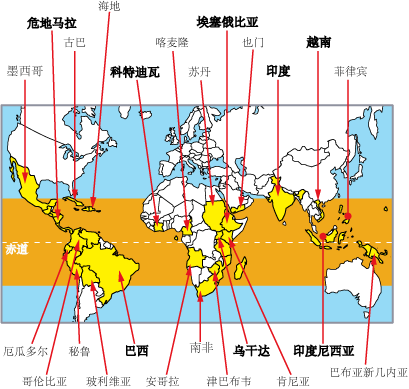
Coffee trees need high altitude, tropical climate and fertile soil to grow the best coffee beans. Such climatic conditions on earth surround the equator, about 25 degrees north latitude to 30 degrees south latitude, this zone, commonly known as the golden coffee belt. When it comes to coffee in the world, let's talk about Chinese coffee first. According to the above definition, China can grow coffee despite its vast territory and abundant resources.

Introduction of Coffee Grinding degree characteristics, Taste and Flavor description in Lazimus Manor, Colombia
Arabica species (scientific name Coffee Arabica) have to be mentioned in Colombian coffee species. Arabica coffee trees grow between 900m and 2000 m above sea level; they are hardy, and the suitable growth temperature is 1524 ℃; they need more humidity, and the annual rainfall is not less than 1500 ml. At the same time, they also require higher cultivation techniques and conditions. So now you can understand.

Description of Flavor and Taste of Fine Coffee beans in Lazimus Manor, Colombia
Colombia has beautiful mountains and rivers, beautiful scenery, pleasant climate, spring all year round, fresh air and refreshing air. Colombia's mild climate, humid air, and diverse climate make it a harvest season all year round, with different kinds of coffee ripening at different times. What they grow is Arabica coffee beans of unique quality, and the coffee made from this coffee bean has a strong flavor.

Panamanian Emerald Manor Rose Summer is a professional coffee manor?
Mzuzu is the provincial capital of northern Malawi and the third most populous city in Malawi. Almost the whole country of Malawi is high in the mountains, so there is a significant vertical difference in climate in most areas, which is the highland climate in the tropical dry and wet season. Generally speaking, the temperature in the alpine plain is very mild and stable, but the temperature in winter can be as low as 4 degrees Celsius. The temperature in the basin is higher than that in the basin.

Introduction to fine coffee with moist and smooth taste in Hawaiian Coffee Manor
The excellent quality of Kona coffee benefits from the suitable geographical location and climate. Coffee trees grow on the slopes of volcanoes, and their geographical location ensures the altitude needed for coffee growth; the dark volcanic ash soil provides the necessary minerals for coffee growth; and the climatic conditions are very suitable. The morning sun gently passes through the steamy air, and in the afternoon, the mountains become more and more.

Why do Ethiopian coffee beans have good quality? what conditions do high-quality coffee beans need?
The planting and growth of coffee trees need strict environmental requirements. Climate, altitude, soil, as well as the way coffee beans are picked and the process of production will affect the quality of coffee. First, the elevation of Ethiopia is mainly mountain plateau, most of which belong to the Ethiopian plateau. The central and western regions are the main body of the plateau, accounting for 2% of the whole territory. 3. The East African Rift Valley runs through the whole territory, with an average elevation.

High-quality Hawaiian Kona Coffee introduces the production area of Manoa Valley in Oahu.
The quality of the fine Kona coffee is suitable for the right geographical location and climate. Coffee trees grow on the slopes of volcanoes, and their geographical location ensures the altitude needed for coffee to grow; the dark volcanic ash soil provides the necessary minerals for coffee. This is probably due to the fact that Kona Island is rich in volcanic black mud with moderate acidity, rich mineral content and suitable water content. Parallel

A brief introduction to the cultivation of fruit-sweet boutique coffee beans in Rwanda, geographical location, climate and altitude
But in any case, the soft and full-bodied taste of the country's coffee is great. Rwanda is a small African country, and the local people are relatively poor, but it produces straight and very good coffee. Unlike its neighbors Kenya and Ethiopia, Rwanda's coffee is mainly round bourbon. The taste is not as prominent as Ethiopia and Kenya, but it is extremely uniform.

Fresh Hawaiian Kona Coffee Flavor Taste the characteristics of the manor area introduce Hawaiian boutique coffee
The quality of the fine Kona coffee is suitable for the right geographical location and climate. Coffee trees grow on the slopes of volcanoes, and their geographical location ensures the altitude needed for coffee to grow; the dark volcanic ash soil provides the necessary minerals for coffee. This is probably due to the fact that Kona Island is rich in volcanic black mud with moderate acidity, rich mineral content and suitable water content. Parallel

A brief introduction to the cultivation of round and plump boutique coffee beans in Rwanda, geographical location, climate and altitude
Rwanda has been growing coffee since colonial times. Although the crops are mainly coffee, the quality of coffee produced in Rwanda is not outstanding, and its status in the coffee world is low, and few people pay attention to it. Most of the coffee varieties grown in Rwanda are bourbon. Rwanda, known as the country of Thousand Hills, has a high-altitude mountain environment, fertile volcanic soil and abundant precipitation.

Can coffee trees be planted in the coffee tree planting room? Growth conditions of Coffee trees
Professional coffee knowledge exchange more coffee bean consultation Please follow the coffee workshop (Wechat official account cafe_style) Coffee trees are difficult to grow outside tropical and subtropical climates, but if you have enough indoor and outdoor space or outdoor space as well as a suitable climate, you can plant several coffee trees at home and produce a small number of coffee beans yourself. A coffee tree takes three to five years.

What area does the coffee belt refer to near the equator? why is it so important?
Although the world drinks more than 2 billion cups of coffee every day, few of us know where the coffee comes from. Here, let's look at what the coffee belt is and why it is so important. Coffee bean belt is the origin of coffee in the world. The coffee belt is located between the Tropic of Cancer and Capricorn, 23.5 degrees north and south of the equator. The coffee belt passes through about 70 countries, which
Introduction to the original taste and characteristics of Colombian coffee beans
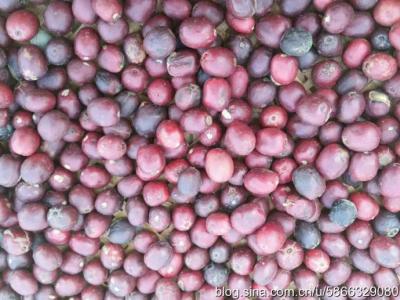
An experienced bean baker will have an in-depth understanding of the original taste and characteristics of raw beans, and then present the best flavor of coffee according to its characteristics. From the origin of coffee, climate, altitude, the way coffee fruits are processed after harvest, to the water content of coffee beans during packaging, and the temperature and humidity stored at the export of coffee beans, all affect the taste of coffee roasted. So, an experienced person

Hawaiian Kona Coffee, the world's top boutique coffee.
Hawaii has made the Arabica seed into the world's top boutique coffee. Hawaii Kona = excellent Arabica species + coffee suitable planting belt + Hawaii dark volcanic ash soil + marine monsoon climate + 150 m to 750 m above sea level, across latitudes 19-22 degrees, south of the Tropic of Cancer, the Hawaiian Islands, blown by the monsoon, is a perfect coffee species.

With the climate warming, coffee is facing the double threat of the loss of arable land and the reduction of bees.
Professional baristas exchange please follow the coffee workshop (Wechat official account cafe_style) the total amount of land suitable for coffee farming is expected to decline by 73% to 88% by 2050, the lead author told carbon brief. Most importantly, bees play a key role in pollinating coffee plant species that can incidentally be as high as 18% due to climate change. This study is the first to be investigated.

The planting situation of Fine Coffee in Spring Manor in Colombia Historical Variety Market Environment Climate Sea
Arabica species (scientific name Coffee Arabica) have to be mentioned in Colombian coffee species. Arabica coffee trees grow between 900m and 2000 m above sea level; they are hardy, and the suitable growth temperature is 1524 ℃; they need more humidity, and the annual rainfall is not less than 1500 ml. At the same time, they also require higher cultivation techniques and conditions. So now you can understand.

Kona Coffee, a coffee-producing area of Hawaii in the United States, with a geographical environment suitable for growing coffee.
The quality of the fine Kona coffee is suitable for the right geographical location and climate. Coffee trees grow on the slopes of volcanoes, and their geographical location ensures the altitude needed for coffee to grow; the dark volcanic ash soil provides the necessary minerals for coffee. This is probably due to the fact that Kona Island is rich in volcanic black mud with moderate acidity, rich mineral content and suitable water content. And

Tropical fruit-flavored Panamanian coffee beans: a brief introduction to geographical location, climate and altitude
Balu is a young volcano with a rugged mountain, more than 3400 meters above sea level, and belongs to an active volcano. Due to the excessive temperature difference between morning and evening, the coffee of Alida Manor needs 5 years of care after sowing to usher in the first harvest. The waiting time for receipt is quite long (usually coffee in producing areas is only 3 years). Although the plant growth is slow, it is very helpful to the development of coffee flavor.
Arabica coffee can't adapt to climate change. Production is plummeting? Carbon dioxide may be the savior.
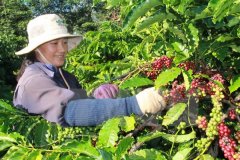
For more information on coffee beans, please follow the coffee workshop (Wechat official account cafe_style) at the end of last year, the United Nations Climate change Panel (IPCC) released a major research report on global warming of 1.5C, which solemnly warned that if countries do not reduce carbon dioxide emissions as soon as possible, global warming will exceed 1.5C between 2030 and 2053 [1]. However, President Sichuan of the United States